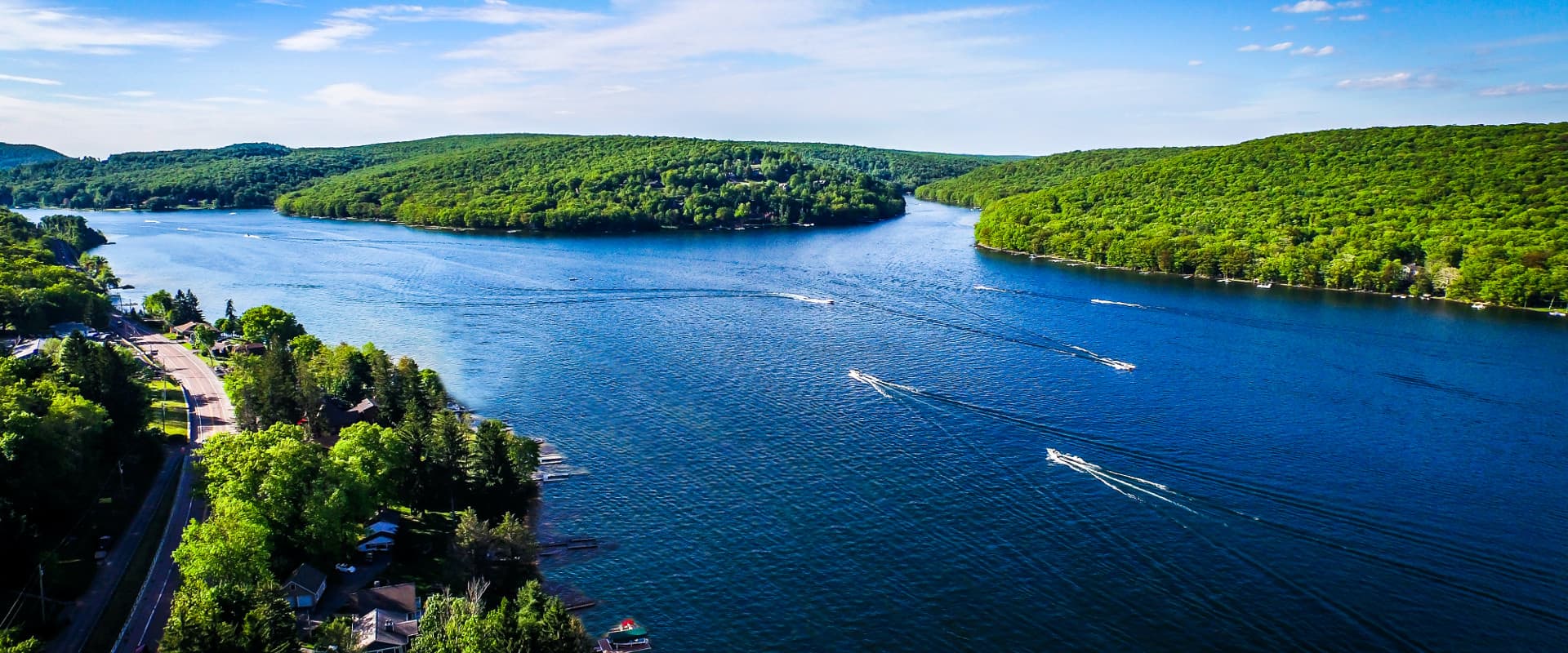

As part of the Deep Creek 100 year of events and celebrations, Brookfield Renewable allowed for guided tours of the Deep Creek Dam and power station. These tours allowed for small groups to tour each section of the facility and get in-depth information from long-time employees and members of Brookfield Renewable staff. As you probably know by now, the Deep Creek Hydro-Electric Dam was finished in1925, resulting in the creation of Deep Creek Lake that same year. More than 1,000 people were assigned to the construction project, resulting in two make-shift camps being erected, one at the site of the dam, and another at the site of the power station. Each camp offered a dining hall and housing for those working on the project. The first step was to dig a 1.5 mile tunnel. In an area well versed in mining, it’s said that tunneling was the easiest part of the project. Still today, you can see the large opening atop the tunnel on Oakland Sang Run Rd that allowed donkeys and wagons to be lowered into the tunnel to assist with construction efforts.
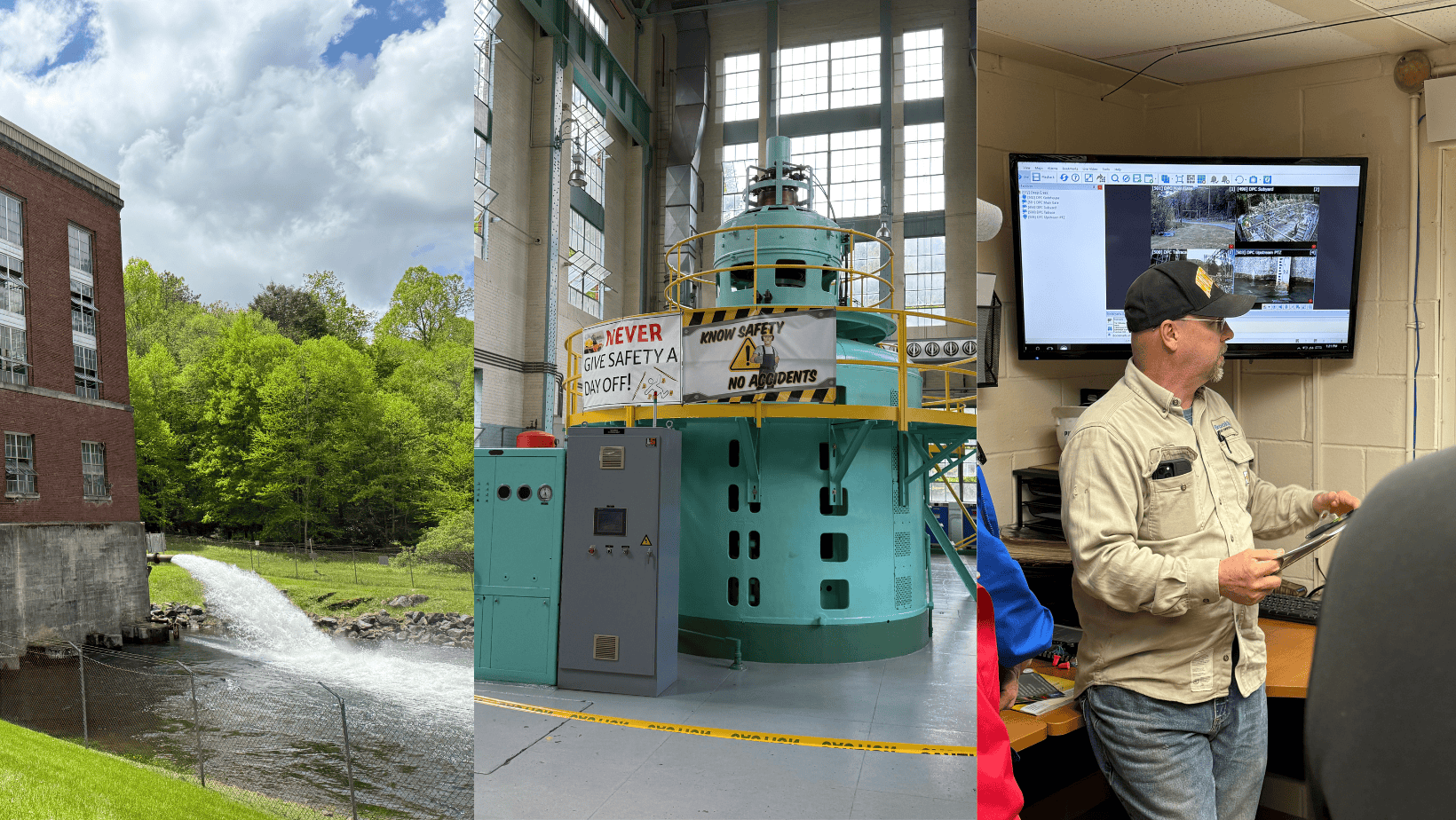
One Hundred years later, the original equipment used on day one in 1925 is still being used today in 2025. The turbines were made by Allis-Chalmers, a company better known for their tractors. When in operation, these turbines put out an impressive 514 RPMs, 20 Mega Watts per hour, and moves water 630 cubic feet per second. For reference, 1 cubic feet per second is roughly equal to 7.48 gallons of water. One of the more surprising facts was that the dam and plant have been remotely operated since 1944. While there are employees on site (two to be exact), the actual operations of the dam are all handled from the control station in New York.
Another surprising fact was that the dam only produces power 15-20% of the time. The power leaves the station and splits into two sections, one headed to the Garrett Substation in McHenry, and the other to the Pen-Mar Substation in Pennsylvania. As the dam is limited to the rule band for lake levels, all of the conditions need to be right before any water is released. Deep Creek Lake is not fed by any large rivers or waterways, but rather small creeks and streams. This means that the lake relies mostly on precipitation to increase water levels. The dam operates controlled releases, which are posted on the website, for a few reasons. Most commonly, releases are to benefit the rivers and whitewater enthusiasts. In a normal year, there are releases from mid-April to mid-October, with up to three releases per week during the early summer months. At the time of this tour in May, we’d received a great deal of rain in the preceding days, so the dam was running full speed to drop the water down to a safe level. Had we gotten the historic rainfall that happened in neighboring Allegany County, we’d have seen water over the dam and into the spillway. To date, that’s only happened three times, the most recent happening in 1990.
.png)
What was stressed to us most was that the dam is operated first and foremost based on water levels. In the last 20 years, there’s only been one time that a grid emergency required the plant to produce power when water levels were not sufficient. Otherwise, releases and power production are based solely on water levels and the lake’s rule band.
This unique experience and behind-the-scenes look at the Deep Creek Dam and Hydro-electric plant was one we won’t soon forget! Special thanks to the Deep Creek Watershed Foundation, Deep Creek 100 Committee, and Brookfield Renewable Energies for organizing the tours.

Connect